

Habanos S.A.’s Pricing Strategy: From Volume to Ultra-Luxury Premiumization
Sep
Habanos S.A., the joint-venture monopoly that markets Cuban cigars worldwide (50% Cuban state entities / historically Imperial Brands, later a Hong Kong-linked partner), has executed one of the most aggressive repositioning campaigns in the premium cigar industry. The strategy centers on treating Habanos—especially the top of the portfolio—as true luxury goods comparable to high-end watches or handbags, rather than relatively accessible premium smokes.
The Pivot: 2020 Ownership Change and the 2022 “Global Pricing Standard
The shift accelerated after the 2020 sale of Imperial Brands’ 50% stake to a Hong Kong-based investor group (Allied Cigar Corp./related entities) for roughly €1.23 billion. This brought stronger Asian capital and influence, coinciding with rising Chinese demand.
In May 2022, Habanos formally introduced its “global pricing standard” (also called homogenization or unification strategy). The explicit goal was to align worldwide recommended retail prices more closely with those in Hong Kong—one of the world’s most expensive markets due to high local taxes and strong luxury demand. Company statements framed this as treating Cuban cigars like other global luxury products, eliminating “disturbances” caused by large price gaps between markets (e.g., cheap Spain vs. expensive Hong Kong/London).
Key impacts of the 2022 adjustment
- Super-premium brands hit hardest: Cohiba and Trinidad saw prices double, triple, or more in many markets. Some Behike and Trinidad vitolas rose 150–300%+. Montecristo Línea 1935 and Romeo y Julieta Línea de Oro also faced steep increases
- Core global brands (Montecristo, Partagás, Hoyo de Monterrey, H. Upmann, Romeo y Julieta standard lines): Typically +15–25%.
- Other brands: +10–15% or moderate single digits for value lines.
In Germany, the portfolio median rose ~13%, but the average price jumped ~39% because of the high-end skew.
Habanos cited inflation, higher production/logistics costs, and the need to position the highest tier properly. Critics noted that true price uniformity was never achieved because of differing national taxes, duties, and currencies—the policy mainly functioned as a sharp upward reset.
Ongoing Pattern: Tiered Annual Increases and Super-Premium Focus
Post-2022, Habanos has applied more measured but persistent annual increases, usually announced near year-end for the following January.
Spain serves as a useful benchmark because of relatively low taxes and high volume (often the #1 or #2 market by volume; China leads by value). Cumulative effects remain dramatic: a Cohiba Siglo VI rose from ~€38 in early 2022 to €105 by 2025–2026 in Spain; Behike lines that were €50–60 now routinely exceed €200–€230. Some limited editions and flagship releases retail above $300–$500 per stick.
The company has also expanded high-margin limited editions, Reservas, Gran Reservas, and regional exclusives, reinforcing scarcity and collectability.
Strategic Logic and Results
Habanos’ approach rests on several pillars:
1. Premiumization / Luxury Repositioning — Explicitly elevate Cohiba as a “Maison” of ultra-luxury and Trinidad as the boutique elite brand. Lower-volume, higher-margin sales replace earlier volume emphasis.
2. Scarcity Economics — Production constraints (weather, labor, energy) and controlled allocations amplify pricing power. Secondary-market premiums often exceed official list prices.
3. Asia Pivot — China and broader Asia have become major revenue drivers (China ~24–27% of sales in recent reports). Wealthy buyers there tolerate (and sometimes drive) high prices.
4. Revenue Over Volume — Record results prove the model works financially: $545M (2022), $721M (2023, +31%), $827M (2024, +16%). Growth has come overwhelmingly from price, not more cigars shipped. Exports remain well below pre-pandemic peaks.
5. Selective Distribution*— Emphasis on official La Casa del Habano network and markets where Habanos has stronger control or ownership influence. Reports have circulated of allocation pressure on independent distributors lacking equity ties.
Criticisms and Market Consequences
- Traditional European and other longtime buyers feel priced out; many have shifted toward high-quality Nicaraguan and Dominican alternatives.
- Official list prices do not fully dictate street reality—scarcity, gray markets, and counterfeits complicate the picture.
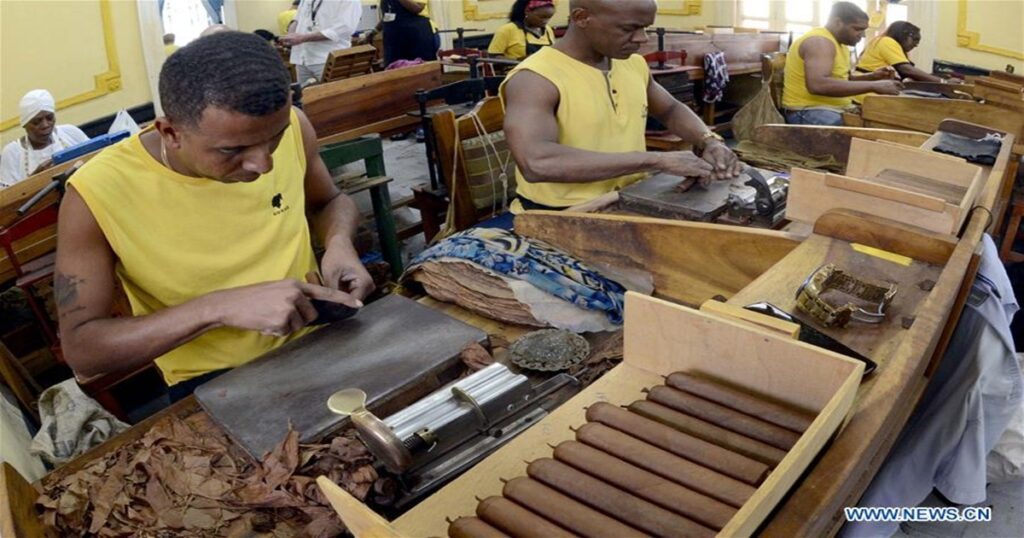
- Workers inside Cuba have seen little direct benefit from the revenue surge.
- Sustainability questions remain: how far can prices rise before demand softens even among luxury buyers, especially if supply continues to tighten due to Cuba’s energy and production crises?
Current Stance (2026)
The era of sudden doublings/triplings appears to have paused in favor of low-single-digit annual adjustments, with the ultra-premium tier often held steady. This suggests Habanos believes the major repositioning is largely complete and is now managing the new elevated price architecture while protecting the highest-margin references.
In short, Habanos S.A. has successfully transformed Cuban cigars from a premium category with broad (if aspirational) appeal into a scarcer, higher-status luxury product. The strategy has delivered strong revenue growth amid declining volumes, but it has also narrowed the consumer base and increased reliance on scarcity and Asian wealth. Whether this model remains optimal under ongoing production constraints will be tested in the coming years.
